
Ladles of Love

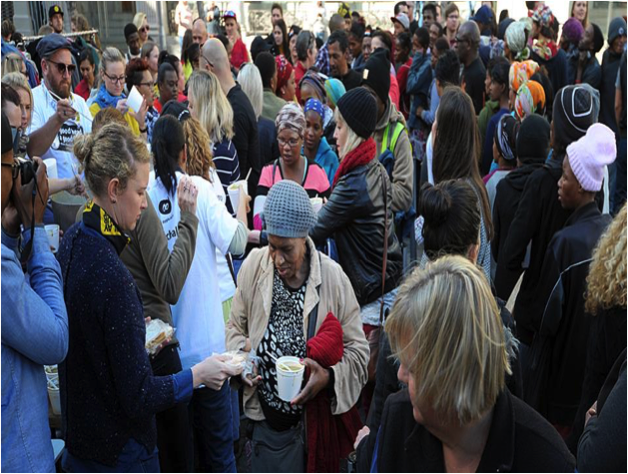
Our first Love Kitchen dates back to July 2014 and continue to take place every Tuesday outside Doppio Zero in St George’s Mall in Cape Town’s CBD. Soon thereafter, we began serving meals in Roeland Street and a third initiative was launched in November 2015, providing meals on Thursdays at the Haven Shelter in Sea Point. As the project grew, we needed a name for the new organisation—and Ladles of Love was born.

Since inception, Ladles of Love has served thousands of meals and continues to grow. We have served more than 160,000 meals to date.

In addition to serving the homeless community, we now provide food to another vulnerable group of society – schoolchildren. Did you know that there are hundreds of thousands of kids going to school hungry every day? How can they learn on an empty stomach? Ladles of Love knows how to nurture bodies and souls, and so we decided to get involved. Our in-school feeding scheme is known as ‘The Munch Club’, and it’s dedicated to providing healthy, tasty meals to keep youngsters full and able to concentrate on their studies.

For more information visit: ladlesoflove.org.za or contact kate@ladlesoflove.org.za

Read more

New Jerusalem Children’s Home

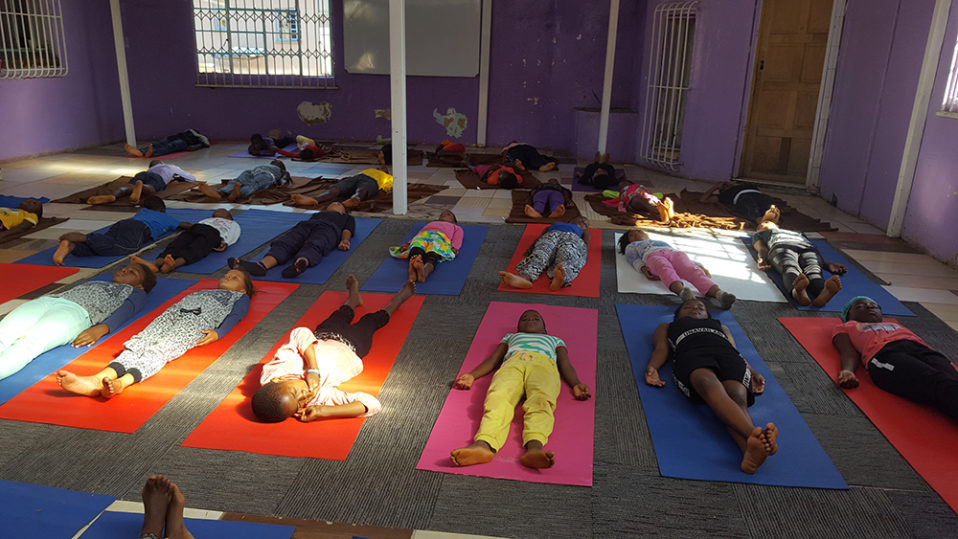
We had introduced the Breath-Water-Sound programs, yoga, meditation and games with the kids which seeks to address the challenges of economically and emotionally distressed communities by empowering them. It has been reported back that the children are getting along better in their social groups and are happier and more peaceful.

Project Leader: Pramod Sonne | pramod@sonne.co.za 

Read more

Love Where You Live

The mission is to bring people of the community together to clean up litter and leave a trail of happiness behind in unmaintained public areas. Areas will be left cleaner and happier by ensuring that all traces of litter are collected and disposed of appropriately, and by putting up posters of motivation in these areas to maintain cleanliness.

The Goals and Objectives:

  • Create an awareness to keep our natural environment clean.
  • Encourage members of the local community to join hands to make a difference.
  • Collect garbage once a month from areas identified to be dirty, and dispose of the garbage in the proper manner.

Join us for World Clean-up Day! Be part of the biggest civic action in human history!

Date: Saturday, 15 September 2018.
Time: 9am – 11am.
Venues: Multiple illegal dumping sites in Laudium. See sign-up sheet for allocated sites

Sign yourself or your team up at: https://bit.ly/2MSY8d4. Gloves and bin bags will be provided. Please bring a shovel and/or rake if you have one.

Details on our event page: https://za.iahv.org/event/world-cleanup-day/

Project Leader: Janishtha Gajee | janishtha@gmail.com 

Read more

Comfort with Dignity for Girls

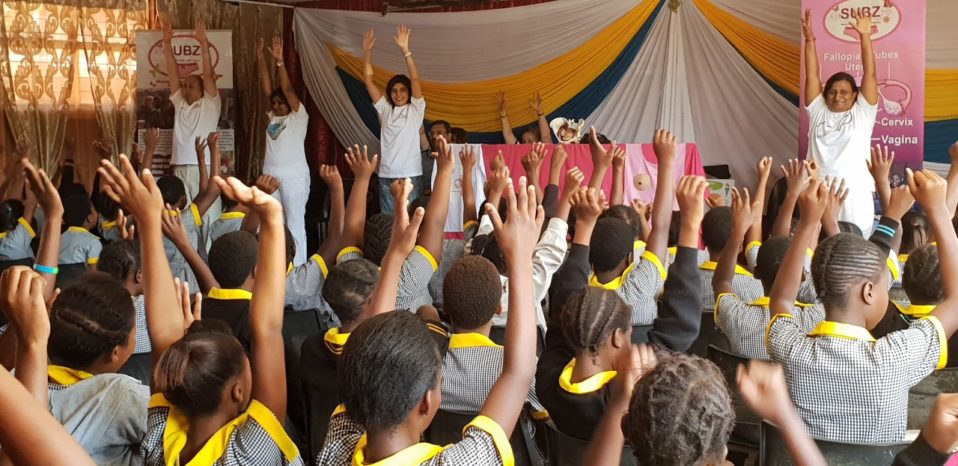
There are approximately 9 million school going girls between the ages of 10 to 18. Research has shown that 25% of these girls miss school for at least one week per month, whilst they are menstruating. The reason for this being affordability, as they have no means to acquire sanitary towels. Family resources are allocated firstly for food. The shocking fact is that many of these girls do not wear underwear on a regular basis as they cannot afford it. Even when they are at school, they do not participate in sport while they have their monthly period.

Aims of the Project

  • To address this undesirable situation and provide the means to minimise absenteeism and see the young women of our country empowered to flourish.
  • To facilitate a platform for the acquisition and distribution of packs of sanitary pads, panties and sealable bags which will go much further than just the traditional solutions to this problem.
  • We intend to engage the public to fund the project for the foreseeable future.
  • Pilot in one school to be completed in 1st year. Then rolled out annually on an ongoing basis.

Objectives

  • The project’s main objective is to support school girls by providing a solution to address the challenge they face in being absent from school.
  • Providing guidance to living a healthy and hygienic way of life by providing some dignity through proper sanitary wear.  

Proposed Solution

  • We have decided to address the challenges faced by these girls by taking on the Comfort with Dignity initiative, creating and managing this project and inviting other stakeholders to participate.  
  • The schools and the community will be engaged.
  • Funding will be obtained and a programme of Health Education and the distribution of sanitary wear will be rolled out.
  • The Subz product and design that has been identified is one created by Sue Barnes

The Product Specifications

  • The panty is 100% cotton therefore allowing the skin to breathe.
  • The elastic is non-woven; rubber based and therefore will not stretch out of shape.
  • The sanitary pad is layered, the outer being 100% cotton knit, waterproof, layers of hydrophilic fabric and the inner is made of a hydrophobic fabric.
  • The sanitary pad is absorbent and will hold up to 25 – 30mls of discharge.
  • The sanitary pad is fully washable, and therefore reusable.
  • The panty and sanitary pad are made of 100% cotton fabric and will last up to 5 years.
  • The pad contains no gels or absorbent chemicals and is thus totally biodegradable.
  • It is a ‘green peace’ product, and being biodegradable will not clog landfills

The Packaging

Each pack costs R211.00/R316.00 including VAT and contains:

  • 2/3 pairs of panties
  • 6/9 washable pads
  • 6/9 plastic sealable bags
  • 1 Drawstring bag
  • Sizes range from a girls age 10 through to a ladies XXXXL

The Approval

  • SABS (South African Bureau of Standards) approval – 2532/C1/N197/R
  • Patent lodged – 2011/06281
  • Product endorsed by Obstetrician and Gynaecologist Dr Attwood-Smith
  • Product endorsed by Pharmacist Anton Lawrenz

The Environmental Impact

The main toilet system in the rural areas is the pit toilet, or long drop.  This is where most ladies dispose of their sanitary pads. This system works on natural bacteria breaking down the waste, so when sanitary pads are placed in the toilet, they block the toilets because decomposition cannot take place. This affects the toilet being in working order and is the main reason why there are very few, useable toilets in rural and township areas.

Used sanitary pads are also disposed of on waste dump areas which are also problematic due to their inability to decompose. This results in landfill areas filling up quicker than planned. Waste then gets dumped anywhere. Amongst the other obvious health and hygiene risks is the risk of the HIV virus being active in this waste.


In the working environment, toilets have ‘sani bins’ provided which are managed by cleaning companies and waste removal is under control.  From private homes, used sanitary wear is discarded in the waste for removable by the municipality which is  transferred to landfill areas.  As previously stated, ladies sanitary wear is not biodegradable, and the sheer volume of discarded used sanitary wear causes a large landfill problem of its own.

The Results

The Subz product can go beyond the school girls as it has the potential to benefit any underprivileged menstruating woman in South Africa.  It can even be used by the elderly with incontinence problems.

Restoration of Personal Dignity

  • Improved self esteem
  • Improved knowledge on personal hygiene
  • Reduction in school / work absenteeism
  • Improved school and work performance
  • More participation in sports
  • Ability to be “equal” in the job market
  • Improvement of rural sanitation
  • A lessening of the destruction of our environment
  • Reduction in landfill overload

In alignment with the major goal of restoring dignity, and empowering young girls and women through basic healthcare, it is evident that this not merely a social issue, but also an environmental one. By engaging in such a project we would like to serve the social, educational, financial and environmental needs of our communities. In doing so, we can be sure that we are heading toward the creation of equal, empowered, healthy and dignified lifestyles for all.

Sue Barnes is an extraordinary woman who has inspired our mission to spread this vision. She has given hope to young girls. She has given them the opportunity to be free, to participate in daily activities, not to feel either ashamed or embarrassed, and she has empowered them – all with a sanitary pad. They have their dignity back, through her initiative, Project Dignity. 

Read more

Tops and Tags

Every single bottle top counts. What seemed like an impossible task in the beginning turned out to be an almost effortless task. Thanks to the many hands that came forward with their bottle top donations.

The beauty of this project is:

  • Double whammy: recycle and clean environment while helping the needy.
  • Anyone can collect: kids, adults and the elderly.

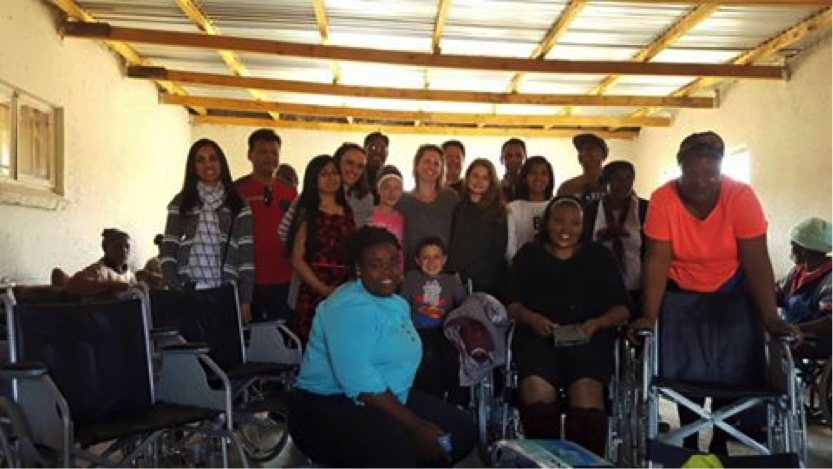
The team collected 293KG of bottle tops, and 11KG bread tags, with our biggest contributors being Heavens Kitchen, Sagewood School and Bettenia School. Together with The Sweethearts Foundation we were able to donate 5 wheelchairs to Boikanyo Old Age Home in Hammanskraal.

Keep collecting so that we can make a difference to someone’s life, as well as help in some small way to save our environment through recycling. Imagine if all these bottle tops and tags were left on the streets or filled into landfill sites along with all the other plastic waste? What a waste! Rather collect them for a good cause.

Read more

Youth Village in Soweto

In August 2005, IAHV SA and its partner organization The Art of Living established a partnership with Forte High School in Dobsonville Soweto in Johannesburg. The partnership started with a medical camp and has progressed rapidly.

There are an alarmingly large number of children at the school, who are from child-headed families or who are heading their families and siblings.


The Youth Village project’s focus is to assist and empower these youth in a sustainable way, by providing the tools and practical experience to manage their lives successfully, both at home and in school The Youth Village project, headed by Art of Living teacher, Aneshree Naidoo, does the above in the following ways:

• Organic Food Garden
• Food distribution
• Feeding Scheme
• Organic Food Garden


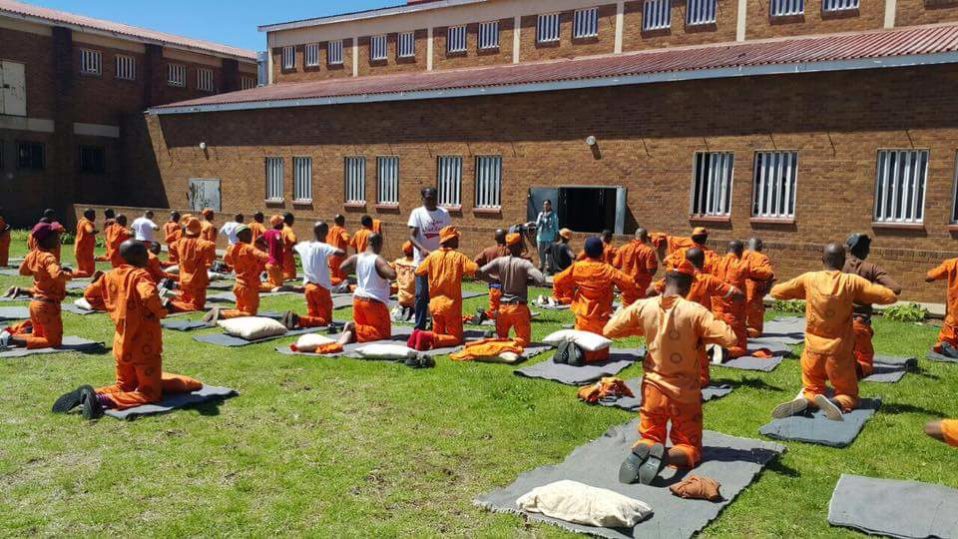
Life empowerment programmes such as: Youth camps and Yes Plus Courses


Our focus has been on nurturing our relationships with our NGO partners. We have had great support from these NGO’s in terms of bringing our youth empowerment and BWS programmes to the youth and community in Soweto. We have adopted the Bokamoso feeding scheme completely and Bokamoso in turn have been assisting other smaller NGO’s in the community as well as the indigent within the community.


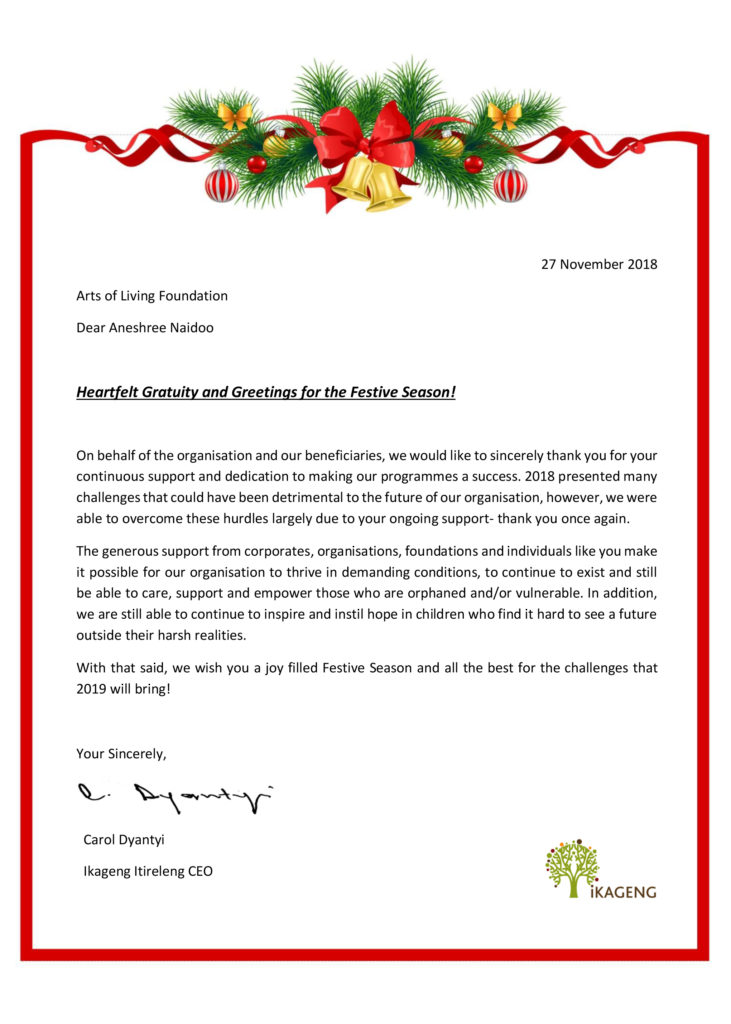
Festive Message from Ikageng’s CEOFestive-Message-from-Ikageng-CEO


Read more